In a Disaster, “Is It Open?” Can Be a Life-Safety Question
Disasters do not just damage buildings. They disrupt the everyday pathways people use to get care, from prescriptions and dialysis to prenatal visits and cancer treatment. When the system is stressed, a simple question becomes urgent: which services are open, where, and for whom? This post explains why real-time facility status is a patient-safety issue and what communities can do to make those answers clearer, faster, and more equitable.
12/17/20254 min read
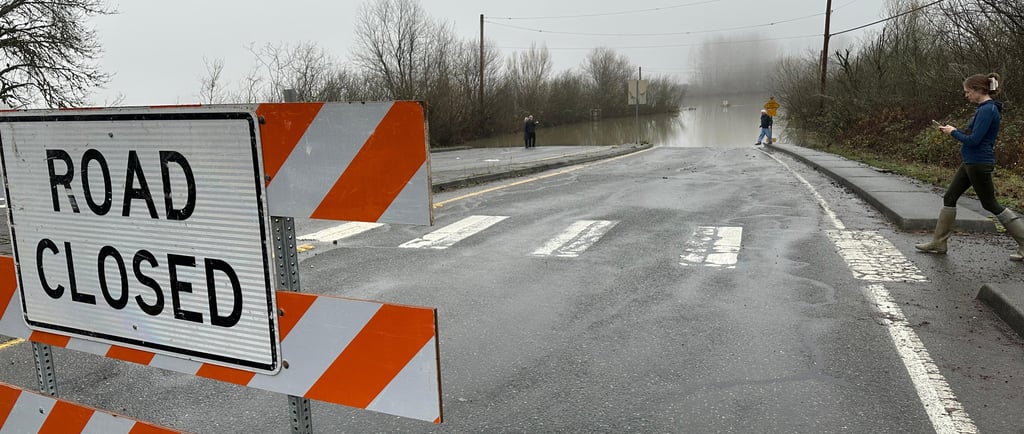
Image courtesy of World Central Kitchen
Disasters rarely create just one health problem. They interrupt the everyday pathways people use to stay stable, from prescriptions and dialysis to prenatal visits and cancer treatment. When the system is under stress, a simple question becomes urgent: which services are open, where, and for whom? This post lays out why real-time facility status is a patient-safety issue and what communities can do to make those answers clearer, faster, and more equitable.
That need is not theoretical. In Washington state right now, flooding, evacuations, road closures, and widespread power outages have created fast-changing conditions across multiple counties (see reporting from AP News and The Guardian). In moments like this, the community needs a simple answer to a complex question: which parts of the health system are operating today, and what services can they safely provide.
This is not just hospitals and pharmacies. It is dialysis centers, community health centers, urgent care, outpatient cancer treatment and infusion sites, imaging and lab services, long-term care and assisted living, behavioral health crisis care, and addiction treatment programs. For many patients, “what’s open” is the difference between staying stable and tipping into a preventable emergency.
Why “open” is not a binary status
During a disaster, “open” often means “open for something.” A facility might have lights on and staff inside, but still be unable to deliver key services safely.
A hospital can be operating while its labor and delivery unit is temporarily nonoperational because of staffing shortages, water pressure issues, a compromised sterile processing department, or a localized equipment failure. An emergency department may be open but diverting ambulances. Imaging may be down due to IT instability. A pharmacy may open for limited hours but cannot dispense temperature-sensitive medications if refrigeration is compromised. A clinic may be open but unable to provide vaccines, infusions, or procedures that depend on cold chain and reliable power. This is why facility status visibility has to track functions, not just doors.
What the evidence shows: disrupted access creates preventable harm
Status visibility matters most for time-sensitive, routine care that becomes dangerous when delayed.
Dialysis
Dialysis is recurring, life-sustaining treatment. Missing even one session can rapidly increase risk. After Hurricane Katrina, researchers documented a five- to seven-fold increase in missed hemodialysis sessions in the month after the storm, alongside increases in hospitalization. Knowing which dialysis centers are open, which can accept transient patients, and how to contact them is not a minor operational detail. It is a direct patient-safety issue.
Pharmacies and medication continuity
Medication access is another predictable failure point. Community pharmacies depend on power, staffing, internet connectivity, and supply chain continuity. When those dependencies fail, the impact shows up quickly for insulin, oxygen-related supplies, antibiotics, cardiac medications, and behavioral health medications.
Research following Hurricane Sandy found that only 29% of surveyed community pharmacies reported having a generator during the storm. Even when policy flexibilities exist for emergency refills, they only translate into real access if people can quickly identify which pharmacies are open and dispensing.
Outpatient cancer treatment, infusions, and other specialty care
Many critical therapies happen outside hospital walls. Radiation therapy schedules, chemotherapy and biologic infusions, and outpatient surgical follow-ups are time-sensitive and can be hard to reschedule.
Recent analysis has linked disasters to treatment delays for cancer patients, including higher odds of interruptions during hurricane exposure (American Cancer Society). When infusion sites close or transportation routes become impassable, patients can lose a narrow window for care.
Behavioral health and addiction services
Disasters increase stress, destabilize housing, and disrupt routines. That is exactly when people need continuity of behavioral health and substance use services. Yet these services are also vulnerable to power, staffing, transportation, and communications failures.
For people receiving methadone treatment through opioid treatment programs, missed dosing can have immediate consequences. Disasters have shown how quickly these programs can become inoperable and how important emergency plans, guest dosing arrangements, and clear public communication are for continuity (see a useful analysis in Ensuring Access to Opioid Treatment Program Services Among Delawareans Vulnerable to Flooding).
Power outages and medically vulnerable populations
Power is healthcare infrastructure. Research following Hurricane Irma found power outages affecting nursing homes were associated with increased mortality and hospitalizations among residents. The details vary by context, but the implication is consistent: power loss can convert a stable situation into an emergency for medically vulnerable populations.
Washington’s flooding is a reminder of the real-world conditions
Flooding events do not just damage buildings. They disrupt the connective tissue that makes care possible, and they do it fast. Road closures can make “nearby” become “unreachable.” Cellular and internet disruptions can knock out phone lines, e-prescribing, and claims processing. Fuel constraints can limit generator runtime and patient transport. Staff may be unable to reach facilities, and supply deliveries may not arrive.
In this environment, a stale status report can be worse than no report, because it can send patients and responders in the wrong direction.
What good facility status visibility looks like
This is not about a perfect system. It is about a reliable, usable, frequently updated picture of what is available, where, and for whom. A strong approach starts with a shared language. Instead of a single “open” label, facilities should be able to report standardized conditions such as open, open with limitations, closed, or diverting. The key is that limitations are specific. A hospital might be open, with labor and delivery closed. A clinic might be open, with infusions canceled. A behavioral health center might be open, but only for walk-in crisis stabilization.
Reporting also has to be low-friction. During response, the best tool is the one people will actually use. A one-minute update, mobile-friendly submission, automatic timestamps, and a clear owner for verification will outperform a complex system that requires perfect data.
Finally, publish in two lanes. Communities need public-facing updates that are plain-language and accessible, while responders and partners need more detail on service constraints, staffing limitations, and patient transfer options. In both lanes, “open” should be paired with “reachable,” using known road disruptions and evacuation zones to prevent false confidence.
Where we go from here
Disasters do not only create trauma cases. They interrupt the everyday services that keep people stable: dialysis, insulin access, oxygen and DME support, outpatient cancer treatment, prenatal care, medication-assisted treatment, crisis counseling, and the routine primary care that keeps small problems from becoming emergencies.
Knowing which medical services are available, and what is temporarily interrupted inside otherwise functioning facilities, is one of the highest-leverage actions a community can take during a crisis. It reduces dangerous delays, prevents avoidable emergency department surge, and helps residents make safer choices when conditions change quickly.
If your jurisdiction is looking to strengthen healthcare infrastructure visibility in a way that is practical, equitable, and sustainable, Health Response Alliance can help facilitate communication and build solutions that work in the real world.
Health Response Alliance is a nonpartisan 501c3 tax-exempt organization.
All contributions are tax deductible to the extent provided by law.
Federal Identification Number (EIN): 33-2575005
© 2026 Health Response Alliance Inc. ALL RIGHTS RESERVED.